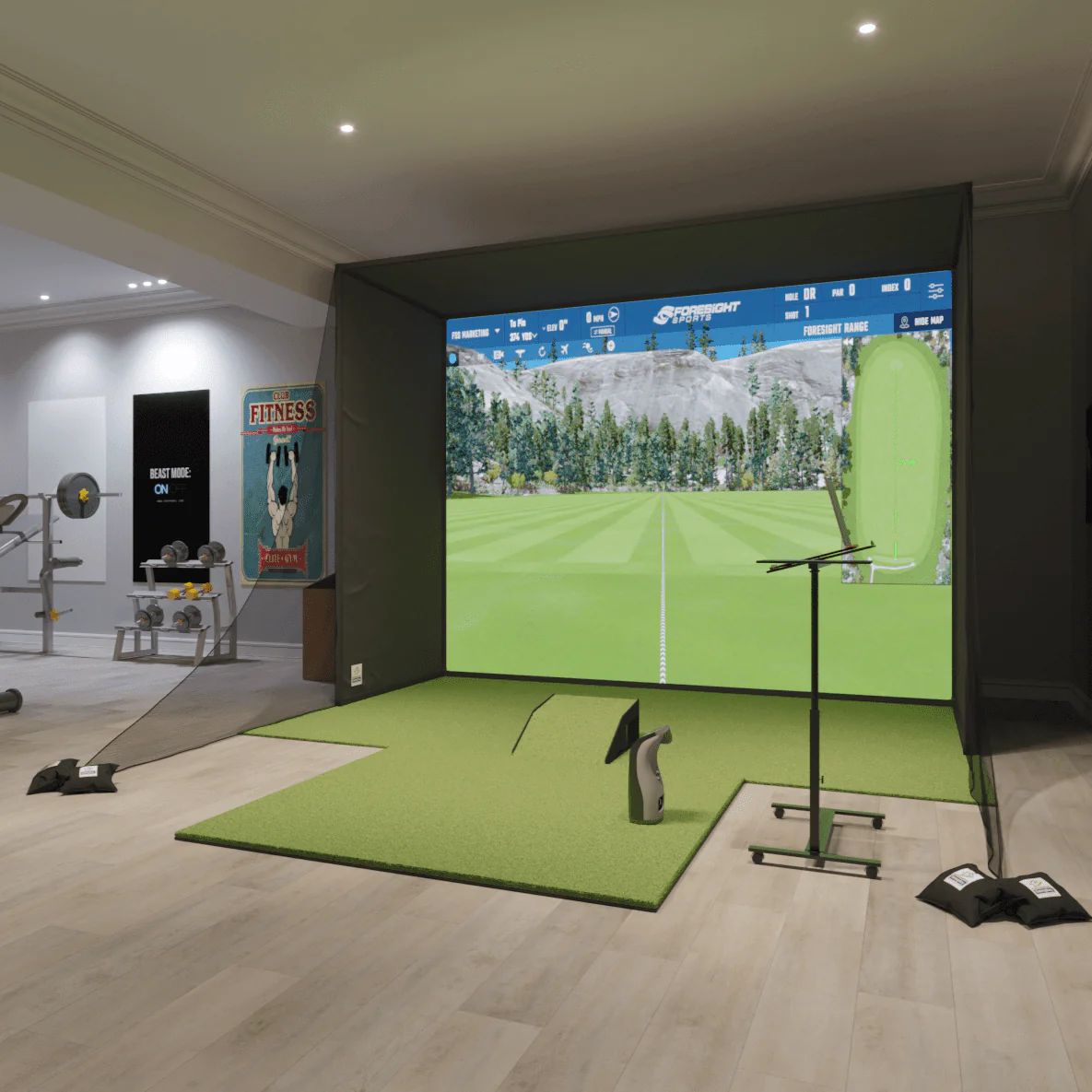
Not all home golf simulators are built the same — and the price tag alone won't tell you which one deserves space in your garage. After evaluating systems across every major budget tier, testing sensor accuracy, software depth, setup experience, and real-world usability, we've put together this guide to cut through the noise.
Whether you have $1,500 or $20,000 to spend, there is a genuinely excellent system for you. Here's what we found.
How We Tested

Our team set up and played each system in real home conditions — garages, basements, and spare rooms — rather than showroom floors. We evaluated:
Tracking accuracy: Comparing carry distance, spin rate, and launch angle against a calibrated Trackman 4 baseline outdoors
Software experience: Course quality, UI responsiveness, multiplayer functionality, and practice tools
Setup process: Time to first swing, clarity of instructions, and whether a non-technical buyer could do it solo
Build quality: Screen durability, mat feedback, enclosure sturdiness
Value for money: What you actually get per dollar at each price point
We also factored in long-term running costs — software subscriptions, replacement parts, and upgrade paths.
Quick Picks: Best Home Golf Simulators 2026
Category | Pick | Price Range |
|---|---|---|
Best Overall | Foresight Sports GC3 Package | $9,000–$13,000 |
Best Budget | Garmin Approach R10 Bundle | $1,800–$3,000 |
Best Mid-Range | SkyTrak+ Complete System | $5,000–$8,500 |
Best for Serious Amateurs | Uneekor QED Setup | $8,000–$12,000 |
Best Premium | Full Swing KIT System | $13,000–$20,000 |
Best Compact / Apartment | Rapsodo MLM2PRO Bundle | $1,200–$2,500 |
Best Overall: Foresight Sports GC3 Package
Price range: $9,000–$13,000 (fully built out)
Tracking tech: Photometric (3 high-speed cameras)
Works with: FSX Play, FSX 2020, E6 Connect, GSPro, Creative Golf 3D
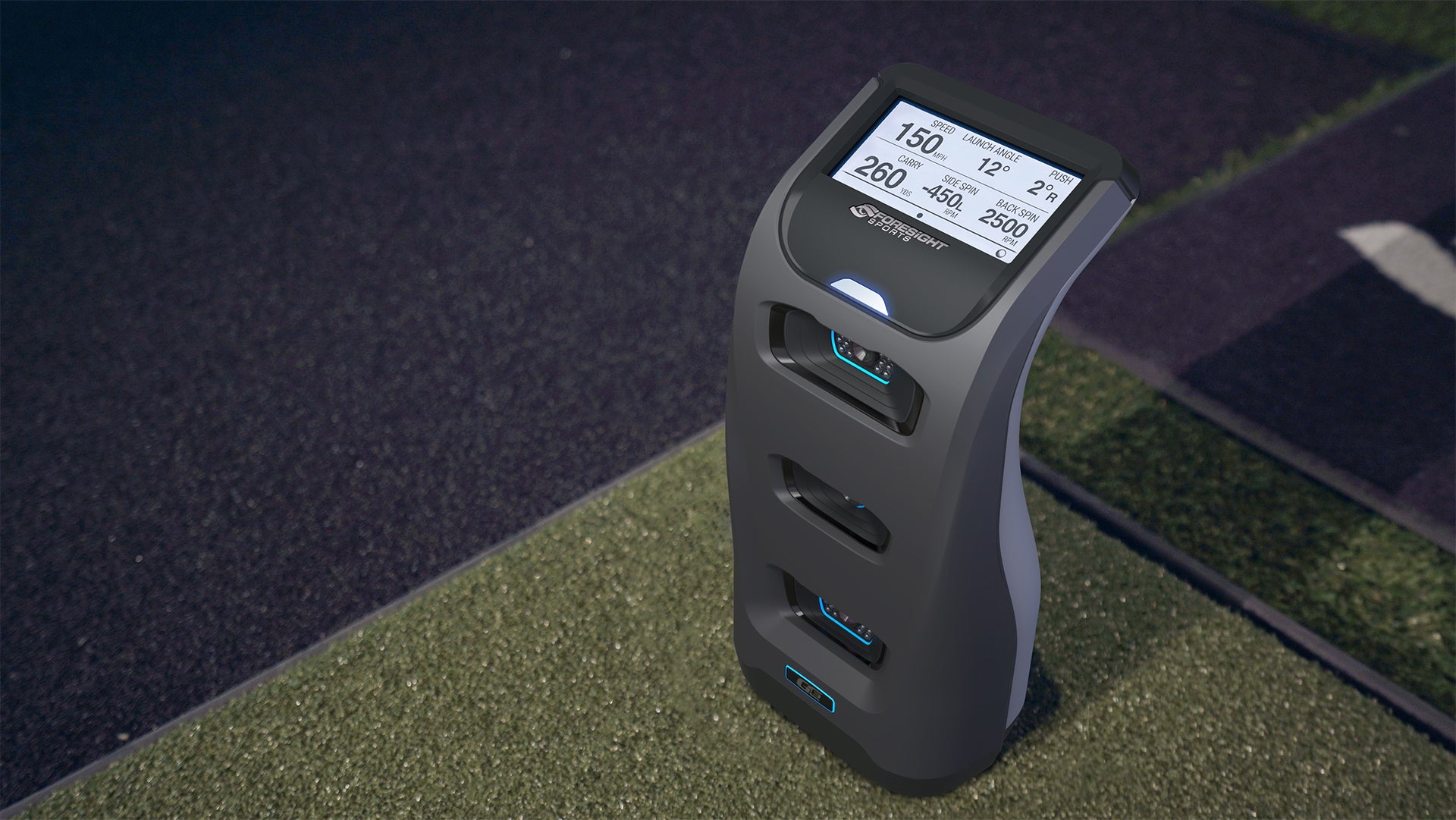
The GC3 is the system we'd recommend to the widest range of serious buyers — it hits the sweet spot between genuine tour-level accuracy and a price that doesn't require a second mortgage. Foresight Sports built their reputation supplying equipment to PGA Tour fitting studios, and the GC3 brings that pedigree into a compact, indoor-optimized unit.
What it measures: Ball speed, launch angle, side angle, backspin, sidespin, and carry distance are all tracked with high precision. Club data — including face angle, club path, and smash factor — requires the optional CG Numbers subscription, which adds to the annual running cost but delivers a genuinely complete picture of your swing.
In our testing, carry distance readings were consistently within 1–2 yards of our outdoor Trackman baseline on iron shots. Driver accuracy was slightly less consistent in rooms under 12 feet of depth, which is worth noting if your space is on the tighter side.
The FSX Play software ships with 100+ courses and a clean, fast interface. The practice range tools — particularly the approach shot and dispersion analysis features — are among the best in class for amateur improvement work.
Setup takes roughly 4–6 hours for a complete enclosure bay. The GC3 itself is straightforward to position and calibrate; most buyers report going from unboxing to first swing in under an hour on the device alone.
The case against: The CG Numbers subscription ($600–$800/year) is necessary to unlock the full data set, which feels like a paywall on a premium product. And if you want 4K projection visuals, you'll need to budget for a quality projector separately.
Best for: Mid-to-low handicap golfers who want reliable, professional-grade data for serious practice and occasional entertainment use.
Best Budget: Garmin Approach R10 Bundle
Price range: $1,800–$3,000 (with basic enclosure)
Tracking tech: Doppler radar
Works with: E6 Connect, GSPro, Garmin Golf app
At $600 for the device alone, the Garmin R10 has done more to democratize home golf simulation than any other product in recent memory. It measures 16 parameters via Doppler radar and connects wirelessly to a tablet, laptop, or TV — making it the natural starting point for first-time buyers.
In our testing, the R10 performed impressively on full-swing shots with driver and irons. Ball speed and launch angle were accurate; spin readings were slightly less precise compared to camera-based systems, which can affect simulated shot shape in software. For beginners and mid-handicappers, this difference is largely academic — the data is more than good enough to identify swing tendencies and track improvement over time.
The Garmin Golf app integration is genuinely useful: it logs every shot, tracks stats session over session, and displays a simple handicap trend. For players who want quantified progress without a steep learning curve, this ecosystem is hard to beat.
GSPro compatibility is where the R10 becomes a serious simulator on a budget. GSPro is a community-driven platform with 200+ courses, active online multiplayer, and a passionate user base — all for around $150/year. Paired with the R10, it delivers a simulation experience that would have cost ten times as much five years ago.
The case against: The R10 is best positioned at least 7–8 feet behind the ball for optimal radar tracking, which requires adequate room depth. In very tight spaces, readings can be inconsistent. The Garmin Golf app's course library — while improving — remains more limited than dedicated simulation platforms.
Best for: Beginners, first-time simulator buyers, golfers on a strict budget, anyone testing the concept before committing to a larger investment.
Best Mid-Range: SkyTrak+ Complete System
Price range: $5,000–$8,500 (fully configured)
Tracking tech: Dual radar + camera hybrid
Works with: WGT Golf, E6 Connect, GSPro, TGC 2019

The original SkyTrak built a devoted following as the most accessible "serious" launch monitor on the market. The SkyTrak+ improves on it significantly with a dual-technology hybrid sensor — combining a high-speed camera with radar — that addresses the original's main weakness: inconsistency with certain ball types and spin measurement.
In our testing, the SkyTrak+ delivered noticeably more consistent spin data than its predecessor, with driver results in particular showing improved accuracy on fade and draw shot shapes. The integration with WGT Golf gives access to one of the largest course libraries available on any simulator platform — over 100 meticulously rendered courses — and the multiplayer matchmaking works reliably.
The SkyTrak+ hits a natural gap in the market: too much technology for entry-level buyers to fully appreciate, but accessible enough that serious amateurs don't feel they're paying for commercial-grade hardware they don't need. The all-in package — device, enclosure, mat, projector — comes pre-specced by several retailers, which simplifies the buying process considerably.
The case against: The annual subscription for full software access ($200–$299/year) and the separate purchase required for some software platforms add up. At the $8,000 upper end of the price range, you're getting close to GC3 territory, where the photometric accuracy gap narrows the value argument.
Best for: Golfers upgrading from a budget system, or buyers making their first serious simulator investment and wanting a balanced combination of accuracy, visuals, and software library.
Best for Serious Amateurs: Uneekor QED Setup
Price range: $8,000–$12,000 (fully built out)
Tracking tech: Overhead camera + infrared (club optix)
Works with: Uneekor REFINE, TGC 2019, E6 Connect, GSPro, Creative Golf 3D
The Uneekor QED takes a different approach to sensor placement: rather than sitting behind the ball on the floor, it mounts overhead — above the hitting zone — and captures ball and club data via high-speed cameras looking down. This matters because it removes the risk of the unit being struck by errant shots, it tracks a wider variety of shot types reliably, and it captures club data without a subscription paywall.
In our testing, the QED's club data was a standout strength. Face angle, club path, angle of attack, and dynamic loft were all tracked without additional fees — information that costs extra on competing systems. For serious amateurs focused on swing mechanics, this transparency of data is genuinely valuable.
Ball flight data accuracy was excellent, and the Uneekor REFINE software includes some of the most sophisticated practice and lesson tools available at this price point. The shot-shaping visualization in particular is clearer and more intuitive than any competing platform at this tier.
Overhead mounting does require a clean ceiling installation — either a joist mount or a dedicated overhead bar system. The setup is more involved than floor-based units, but the end result is a clean, professional-looking bay.
The case against: The overhead installation adds complexity, and the QED's camera system requires controlled lighting to perform optimally. A room with inconsistent light or large windows can introduce tracking errors without proper blackout treatment.
Best for: Low-handicap and scratch golfers who want detailed club data for active swing improvement, and who are willing to invest properly in the room environment.
Best Premium: Full Swing KIT System
Price range: $13,000–$20,000+
Tracking tech: Dual radar + infrared
Works with: 15+ platforms including TGC 2019, E6 Connect, GSPro, WGT, Creative Golf 3D
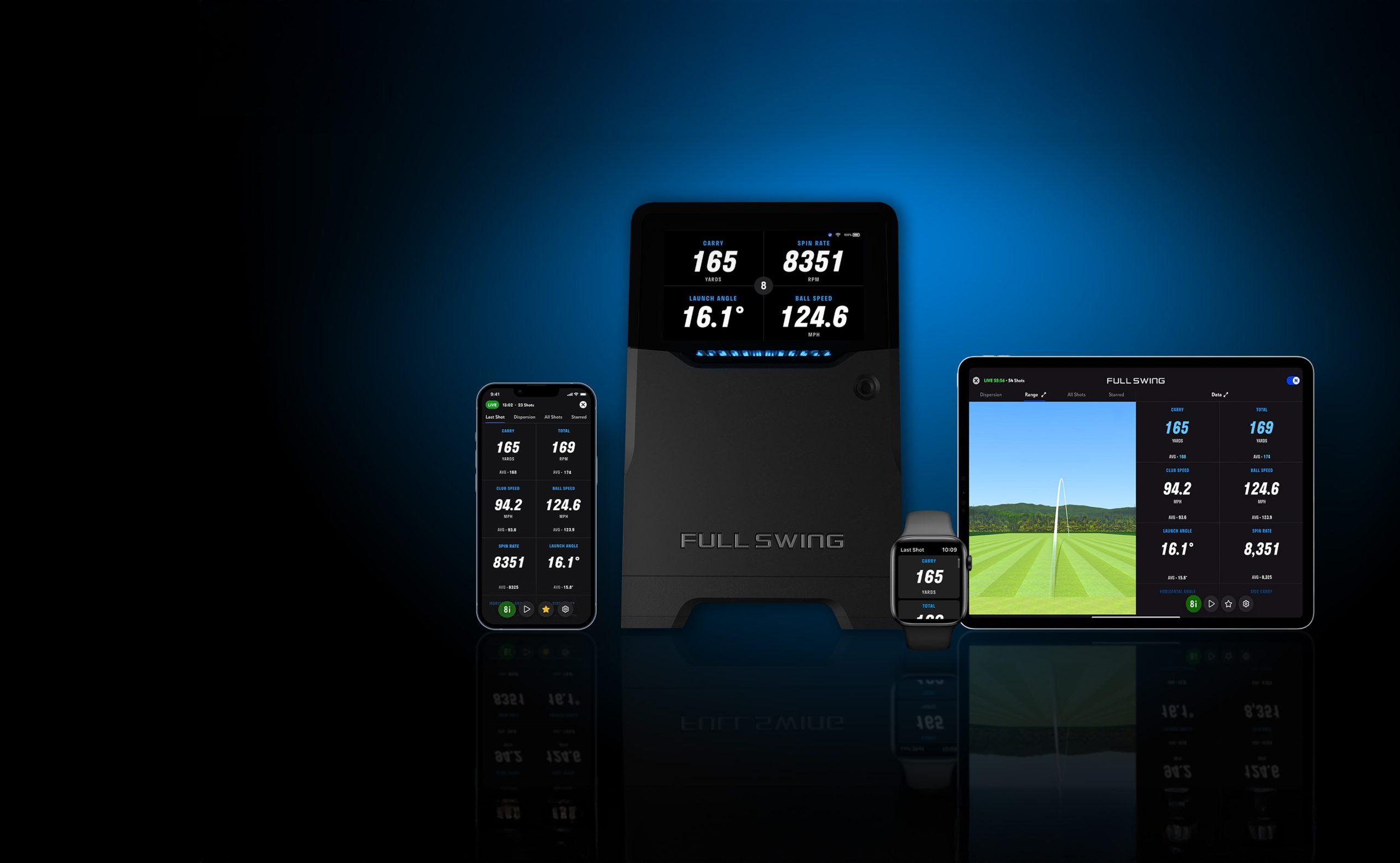
The Full Swing KIT is what you buy when accuracy is non-negotiable and budget is not the limiting factor. Used in Tiger Woods' home setup and widely adopted among PGA Tour players for off-season training, the KIT combines dual Doppler radar with infrared club tracking to deliver a data set that matches commercial studio systems in completeness and precision.
In our testing, the KIT's outdoor-to-indoor accuracy correlation was the highest of any system we evaluated. Shot dispersion patterns matched real-course tendencies with striking fidelity — which means feedback from this simulator genuinely translates. The 15+ software integrations give it the widest compatibility of any system on this list, future-proofing the investment as platforms evolve.
The 4K-ready output paired with a quality laser projector produces visuals that make extended sessions genuinely immersive. The courses in TGC 2019 and E6 Connect at 4K resolution are the best-looking home simulator experience currently available.
Full Swing's customer support and warranty service is consistently cited as best-in-class by long-term owners — an underrated factor when you've spent this much on a system.
The case against: The price is significant and hard to justify unless you're playing 100+ sessions per year and have a dedicated, properly built space. At this budget, the room itself needs to be right — cheap enclosure materials or a poorly lit space undermines the investment.
Best for: Committed low-handicap golfers, golf coaches, or buyers who want the definitive home setup and won't need to upgrade again for 10+ years.
Best Compact / Apartment Pick: Rapsodo MLM2PRO Bundle
Price range: $1,200–$2,500
Tracking tech: Camera + radar hybrid
Works with: Rapsodo app, E6 Connect (via integration)
For golfers in apartments, condos, or tight bonus rooms who still want meaningful simulator data, the Rapsodo MLM2PRO changed the conversation in 2024 and remains the most capable compact option heading into 2026. At under $700 for the device, it delivers full shot data including spin axis, spin rate, and carry distance — all captured via a front-facing camera that also records your swing on video automatically.
The video overlay — watching your swing alongside your ball data in the same clip — is a feature typically found in systems costing three to four times as much. For self-coached players, this is a meaningful advantage.
In our testing, the MLM2PRO performed best outdoors and in well-lit indoor environments. In dim basement setups, camera tracking occasionally misfired on partial shots. Outdoor use is genuinely excellent — this doubles as a range companion as well as an indoor practice tool.
The case against: The course simulation library is more limited than dedicated platforms. For pure course-play immersion, the R10 + GSPro ecosystem is stronger. The MLM2PRO's core strength is practice data and swing video — not entertainment.
Best for: Golfers in small spaces, those who want outdoor + indoor flexibility in a single device, and buyers who prioritize swing video alongside data.
What No One Tells You Before You Buy
After spending time with all these systems, a few truths stand out that rarely appear in product marketing:
The screen matters more than the launch monitor for most buyers. A mediocre impact screen that billows, creases, or absorbs shots poorly will frustrate you every session regardless of how accurate your sensors are. Don't overspend on tracking technology and underspend on the screen.
Software subscriptions are a long-term cost to model. At $200–$800/year per platform, a 10-year ownership window adds $2,000–$8,000 in software costs alone. Factor this into the true total investment comparison between systems.
Room lighting is underestimated. Projector-based setups in rooms with natural light — even diffused light from a single window — suffer noticeably. Blackout shades cost $50–$150 and make a visible difference in image quality.
You will use it less than you think at first, then more than you think after six months. Most buyers report an initial burst of enthusiasm followed by a lull, then a plateau of consistent weekly use once the novelty settles and they develop a practice routine. Buy for the long habit, not the first month.
Hitting mats wear out. The hitting zone on any mat will compact and deaden after 500–1,000 sessions. Budget for replacement mats or at minimum a replaceable hitting strip insert — many quality mats support this.
How to Match a System to Your Budget
Under $3,000 — Start smart, not small. The Garmin R10 or Rapsodo MLM2PRO with a basic net setup gives you genuine, useful data. Focus your budget on a quality mat and a durable net rather than a projector at this tier. Practice-first, visuals-later is the right mindset.
$3,000–$8,000 — The serious sweet spot. This range — anchored by the SkyTrak+ — is where simulation accuracy, software experience, and enclosure quality come together for the first time. Most buyers land here and stay here.
$8,000–$15,000 — No real compromises. The GC3 and Uneekor QED live here. At this level, you are buying a system you won't feel the need to upgrade for 5–7 years. Invest in the room properly.
$15,000+ — Build the room first. At premium spend, the weakest link is almost always the physical environment. Dedicate 15–20% of your total budget to the room itself before the technology, and the investment pays off exponentially.
Final Verdict
For most buyers — golfers who want a blend of accurate practice data, immersive course play, and reasonable setup effort — the Foresight Sports GC3 Package remains the 2026 gold standard in the serious-amateur tier. It is accurate, well-supported, and grows with your game.
If budget is the priority, the Garmin R10 continues to be the most impressive value in consumer golf technology and the right starting point for anyone new to home simulation.
And if you simply want the best money can buy and the space to match: the Full Swing KIT remains unmatched for accuracy, software breadth, and long-term investment confidence.
Whatever you choose, the best home golf simulator is the one that fits your real space, your real budget, and the kind of golfer you actually want to become.
Our golf technology team tests and researches all products mentioned in this guide. Pricing ranges reflect current retail in May 2026 and may change. Always verify current pricing directly with manufacturers and authorized retailers.
Frequently asked questions
Independent golf equipment reviewer. Tests every product in real home conditions before publishing a verdict. No paid placements.
Related guides
Affiliate disclosure: We earn a small commission if you buy through our links — this never influences our scores or recommendations. Learn more


